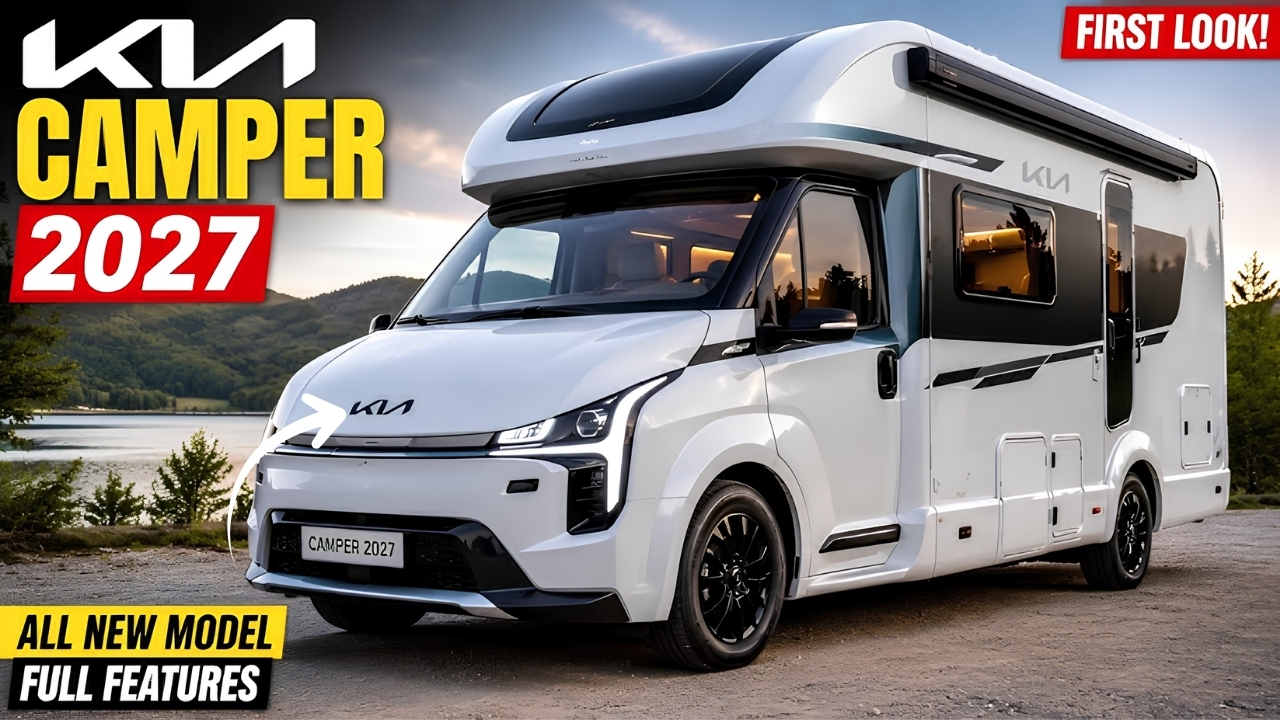
2027 Kia Camper Motorhome : Kia is moving closer to the camper-van market with the upcoming PV7, a large electric van that is expected to create a far more capable base for motorhome conversions than the smaller PV5.
While Kia has not announced a finished, factory-built “2027 Kia Camper Motorhome” with a confirmed living layout, bedroom, kitchen, or bathroom, the PV7 is already generating serious interest among camper specialists.
The important distinction is simple: the PV7 itself is a production electric van, while the full motorhome versions are likely to arrive through conversion companies.
That is increasingly common in the camper world. A manufacturer provides a strong, spacious vehicle platform, then specialist builders add the pop-top roof, sleeping area, cabinets, cooking equipment, electrical systems, and camping-focused storage.
Kia plans to introduce the PV7 in South Korea and Europe during 2027. Its timing matters because electric camper vans are no longer just futuristic showpieces.
Buyers are starting to expect cleaner local travel, quieter overnight stays, and more useful onboard power for work, lighting, appliances, and outdoor equipment.
A Bigger Base for Camping
The Kia PV7 is positioned above the PV5 in the company’s Platform Beyond Vehicle range. This makes it especially interesting for travelers who want more than a compact weekend van.
It has the proportions of a serious commercial vehicle, but its modular design gives conversion firms freedom to create several different camper formats.
Kia has indicated that the PV7 will be offered in Passenger and Cargo versions, with additional derivatives expected later.
A High Roof version is particularly relevant to motorhome builders because it could provide more standing room and greater flexibility for overhead storage, ceiling-mounted lighting, upper cabinets, and convertible sleeping arrangements.
The van measures roughly 210.6 inches in length, 78.5 inches in width, and 78.3 inches in height. That added scale should make a meaningful difference when compared with the more compact PV5.
Instead of building only a simple two-person weekend camper, conversion companies could potentially develop layouts for couples, small families, remote workers, or travelers carrying bikes, surfboards, camping gear, and outdoor cooking equipment.
The Cargo model could be the real star for camper conversion. Its more open rear section may allow builders to install a rear bed, modular kitchen, water tank, compact washroom, folding dinette, or a garage-style storage area.
A flexible layout could let owners use the van as a practical weekday vehicle and a getaway camper on weekends.
Electric Power for Long Trips
The largest available battery is expected to be a 96.2 kWh unit, with Kia targeting more than 285 miles of WLTP driving range for the long-range PV7 Cargo model.
A smaller 71.5 kWh battery is also planned. Actual real-world driving range in a completed motorhome will depend on the body style, passenger load, camping conversion weight, weather, road speed, terrain, and use of cabin heating or air conditioning.
For campers, battery capacity matters for more than highway range. Electric vans can potentially support a more peaceful travel routine.
Instead of idling a combustion engine while stopped, owners may be able to use vehicle power for lighting, refrigeration, device charging, ventilation, and other low-demand camping functions.
However, those systems would need to be designed carefully by the conversion company, particularly because cooking appliances, heating, and air conditioning can use energy quickly.
Kia’s reported 800-volt charging architecture could also be a major advantage. The PV7 is expected to charge from 10 percent to 80 percent in about 20 minutes when connected to a suitable 350 kW rapid charger.
That will not make road-trip charging completely effortless, especially with a heavily loaded camper, but it could reduce the time spent waiting during long-distance travel.
For many owners, the ideal use case may be a combination of regional road trips, campsites with charging access, scenic drives, and overnight stays where the vehicle’s quiet electric operation becomes part of the experience.
What a PV7 Camper Could Include
Kia has not confirmed a universal motorhome specification, so any final PV7 camper will depend on the conversion partner. Still, the van’s size and electric architecture make several features realistic possibilities.
A well-designed 2027 Kia PV7 camper conversion could include:
- A folding rear bench that turns into a double bed.
- A pop-top roof with an additional sleeping berth.
- A compact galley with a sink, portable induction cooking surface, and refrigerator.
- Rotating front seats that become part of the living space when parked.
- Removable tables for dining, laptop work, or indoor relaxation.
- Deep drawers, side cabinets, under-bed storage, and dedicated compartments for camping equipment.
- A roof-mounted awning and outdoor shower connection.
- Auxiliary batteries or a carefully managed connection to the vehicle’s electrical system.
- A digital control panel for lights, water level, cabin settings, charging information, and onboard power use.
Sussex Campervans has already announced plans to expand its Kingfisher camper line with a PV7-based model. That early commitment suggests that established conversion businesses see genuine promise in Kia’s larger electric platform.
The PV5 has already attracted pop-top conversion interest, so the PV7 could offer a more spacious and more comfortable next step for people who want electric travel without sacrificing everyday practicality.
2027 Kia Camper Motorhome
The 2027 Kia Camper Motorhome story is really the story of a new electric platform entering the camper market. Kia has confirmed the PV7 electric van and its 2027 launch plan, but it has not yet released full official details for a single, factory-built luxury motorhome.
Reports and videos showing extravagant Kia RV interiors, solar roofs, built-in bathrooms, or massive off-grid systems should therefore be treated carefully unless those features are confirmed by Kia or a named conversion company.
That does not make the PV7 less exciting. In fact, its modular approach may be its strongest advantage. Instead of offering one expensive and fixed camper layout, Kia could enable a variety of conversions aimed at different lifestyles.
Also Read this – 2026 New Maruti WagonR new facelift is launched, iconic look with luxury features
One version might suit a couple seeking a compact escape vehicle. Another could focus on family trips, while a work-focused model could combine a small lounge, flexible cargo space, and a mobile office setup.
The PV7 also reflects a wider change in the van-life market. Traditional diesel motorhomes remain popular for long-distance travel and rural refueling convenience, but electric camper vans are beginning to appeal to buyers who value quiet driving, modern technology, reduced local emissions, and flexible use in urban areas.
For now, the best way to view the 2027 Kia Camper Motorhome is as an emerging electric camper ecosystem built around the PV7.
The van itself appears to have the size, battery choices, rapid-charging potential, and modular structure needed for credible motorhome conversions.
If conversion partners deliver practical interiors without adding excessive weight, Kia could become one of the more interesting new names in electric van life during 2027.